The mollusk group
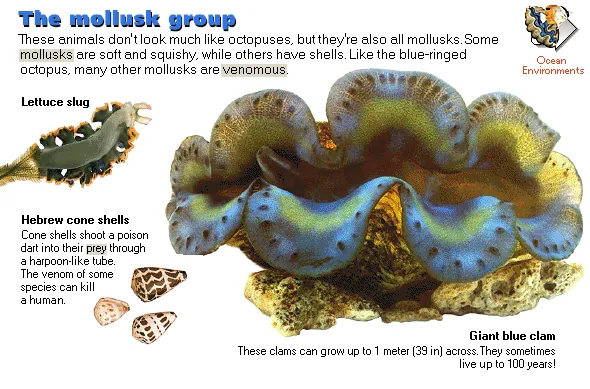
These animals don't look much like octopuses, but they're also all mollusks. Some mollusks are soft and squishy, while others have shells. Like the blue-ringed octopus, many other mollusks are venomous.
Small enough to hold in your hand — deadly enough to drop you in minutes!
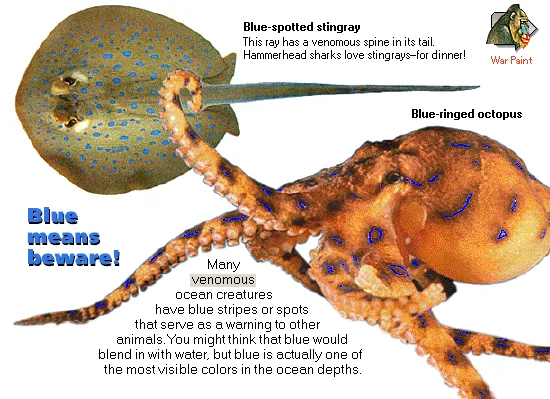
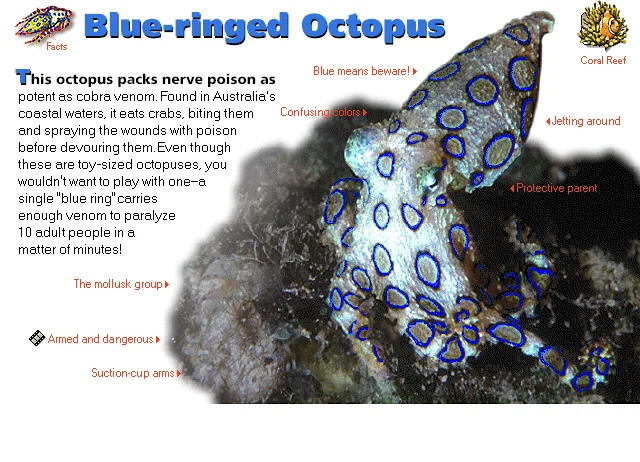
This octopus packs nerve poison as potent as cobra venom. Found in Australia's coastal waters, it eats crabs, biting them and spraying the wounds with poison before devouring them. Even though these are toy-sized octopuses, you wouldn't want to play with one–a single "blue ring" carries enough venom to paralyze 10 adult people in a matter of minutes!

These animals don't look much like octopuses, but they're also all mollusks. Some mollusks are soft and squishy, while others have shells. Like the blue-ringed octopus, many other mollusks are venomous.

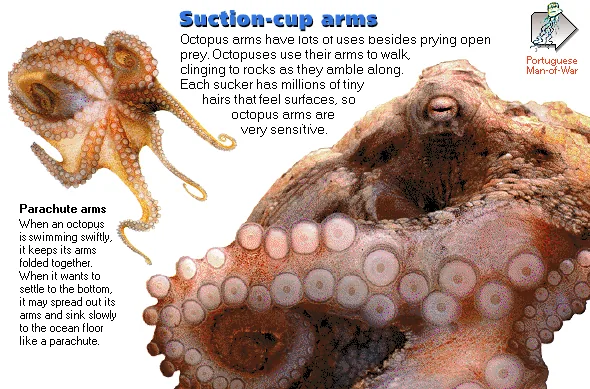
Octopus arms have lots of uses besides prying open prey. Octopuses use their arms to walk, clinging to rocks as they amble along. Each sucker has millions of tiny hairs that feel surfaces, so octopus arms are very sensitive.

Many venomous ocean creatures have blue stripes or spots that serve as a warning to other animals. You might think that blue would blend in with water, but blue is actually one of the most visible colors in the ocean depths.

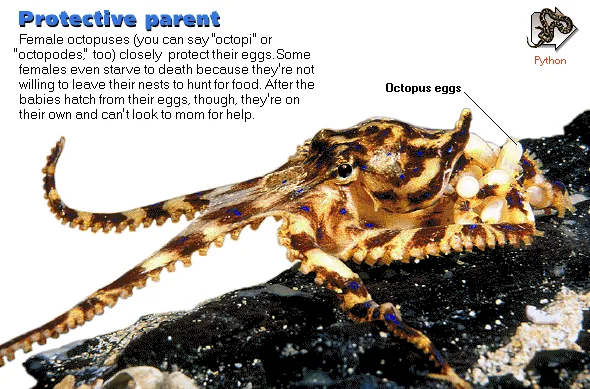
Female octopuses (you can say "octopi" or "octopodes," too) closely protect their eggs. Some females even starve to death because they're not willing to leave their nests to hunt for food. After the babies hatch from their eggs, though, they're on their own and can't look to mom for help.

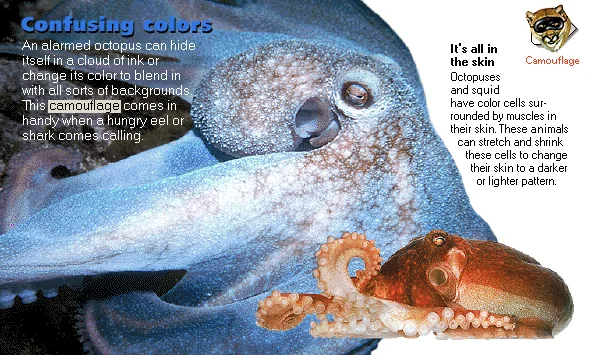
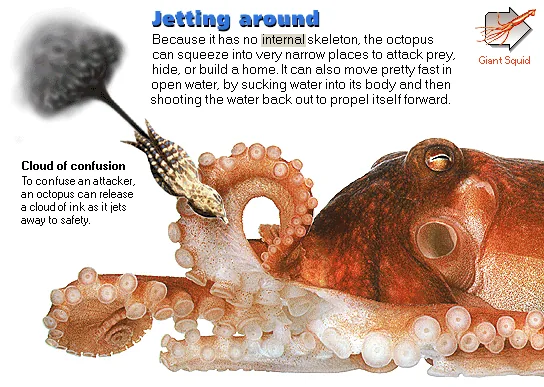
An alarmed octopus can hide itself in a cloud of ink or change its color to blend in with all sorts of backgrounds. This camouflage comes in handy when a hungry eel or shark comes calling.

Because it has no internal skeleton, the octopus can squeeze into very narrow places to attack prey, hide, or build a home. It can also move pretty fast in open water, by sucking water into its body and then shooting the water back out to propel itself forward.
Armed and dangerous — If crabs dream, they probably have nightmares about octopus arms. The octopus curls its eight arms around its prey, holding on with strong suckers. Then it bites into its dinner with its sharp beak, injecting poison and fluids that begin digestion. It finishes by tearing off pieces of flesh with its raspy tongue.
Source: Microsoft Dangerous Creatures (1994) CD-ROM. Text liberated from original screen art; images & clip restored from disc. Original media is Microsoft/supplier copyright — placeholder pending swap to open-licensed assets. Credits & Acknowledgements →