Dangerous Creatures
Fire Salamander
Fire Salamander
Salamandra salamandra

This boldly patterned crawler oozes deadly venom — those bright spots are a warning, not decoration!

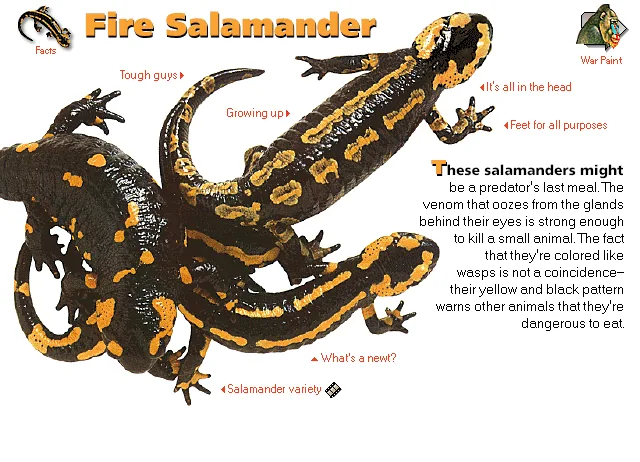
These salamanders might be a predator's last meal. The venom that oozes from the glands behind their eyes is strong enough to kill a small animal. The fact that they're colored like wasps is not a coincidence— their yellow and black pattern warns other animals that they're dangerous to eat.

Get closer

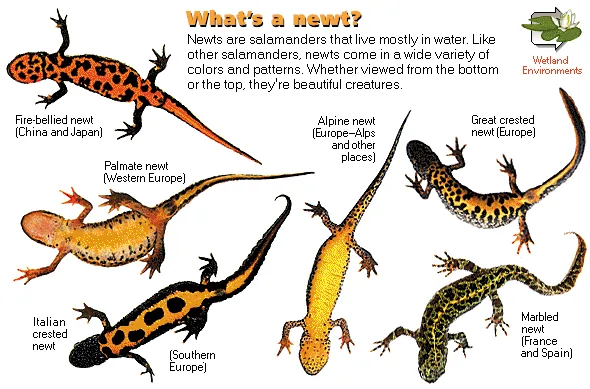
What's a newt?

What's a newt?

Newts are salamanders that live mostly in water. Like other salamanders, newts come in a wide variety of colors and patterns. Whether viewed from the bottom or the top, they're beautiful creatures.

Fire-bellied newtChina and Japan
Palmate newtWestern Europe
Alpine newtEurope–Alps and other places
Great crested newtEurope
Italian crested newtSouthern Europe
Marbled newtFrance and Spain
It's all in the head

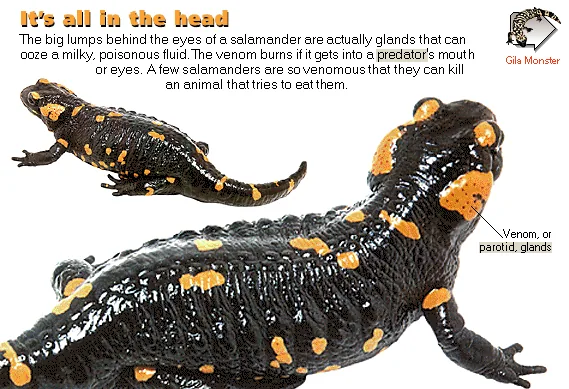
It's all in the head

The big lumps behind the eyes of a salamander are actually glands that can ooze a milky, poisonous fluid. The venom burns if it gets into a predator's mouth or eyes. A few salamanders are so venomous that they can kill an animal that tries to eat them.

Parotid glandsVenom, or parotid, glands
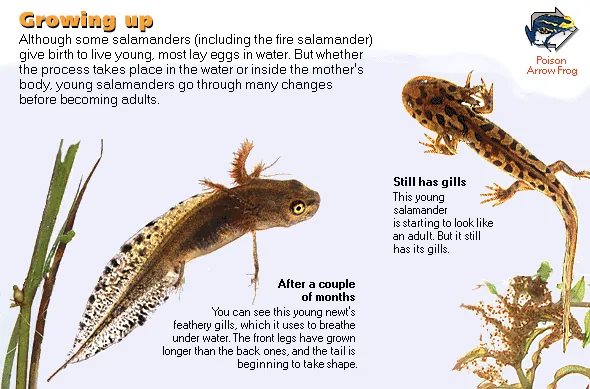
Growing up

Growing up

Although some salamanders (including the fire salamander) give birth to live young, most lay eggs in water. But whether the process takes place in the water or inside the mother's body, young salamanders go through many changes before becoming adults.

After a couple of monthsYou can see this young newt's feathery gills, which it uses to breathe under water. The front legs have grown longer than the back ones, and the tail is beginning to take shape.
Still has gillsThis young salamander is starting to look like an adult. But it still has its gills.
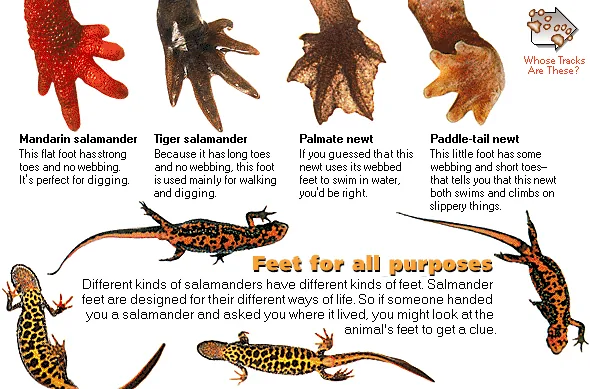
Feet for all purposes

Feet for all purposes

Different kinds of salamanders have different kinds of feet. Salamander feet are designed for their different ways of life. So if someone handed you a salamander and asked you where it lived, you might look at the animal's feet to get a clue.

Mandarin salamanderThis flat foot has strong toes and no webbing. It's perfect for digging.
Tiger salamanderBecause it has long toes and no webbing, this foot is used mainly for walking and digging.
Palmate newtIf you guessed that this newt uses its webbed feet to swim in water, you'd be right.
Paddle-tail newtThis little foot has some webbing and short toes— that tells you that this newt both swims and climbs on slippery things.
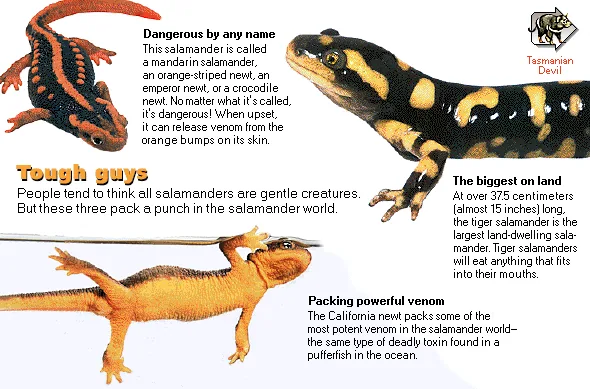
Tough guys

Tough guys

People tend to think all salamanders are gentle creatures. But these three pack a punch in the salamander world.

Dangerous by any nameThis salamander is called a mandarin salamander, an orange-striped newt, an emperor newt, or a crocodile newt. No matter what it's called, it's dangerous! When upset, it can release venom from the orange bumps on its skin.
The biggest on landAt over 37.5 centimeters (almost 15 inches) long, the tiger salamander is the largest land-dwelling salamander. Tiger salamanders will eat anything that fits into their mouths.
Packing powerful venomThe California newt packs some of the most potent venom in the salamander world— the same type of deadly toxin found in a pufferfish in the ocean.

Watch

Salamander variety — Salamanders come in an incredible variety of colors and patterns. This spotted salamander is about 15 centimeters (almost 6 in) long and lives in the woods of North America.

Source: Microsoft Dangerous Creatures (1994) CD-ROM. Text liberated from original screen art; images & clip restored from disc. Original media is Microsoft/supplier copyright — placeholder pending swap to open-licensed assets. Credits & Acknowledgements →