Dangerous Creatures
Wolverine
Wolverine
Gulo gulo

Small but fearless — this ferocious beast will chase a bear off its dinner!

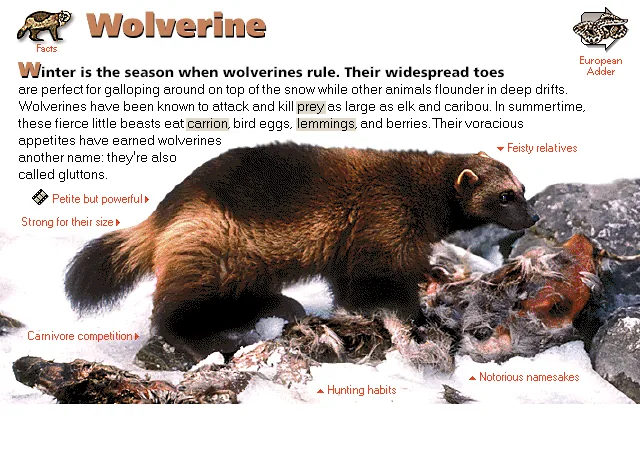
Winter is the season when wolverines rule. Their widespread toes are perfect for galloping around on top of the snow while other animals flounder in deep drifts. Wolverines have been known to attack and kill prey as large as elk and caribou. In summertime, these fierce little beasts eat carrion, bird eggs, lemmings, and berries. Their voracious appetites have earned wolverines another name: they're also called gluttons.

Get closer

Hunting habits

Hunting habits

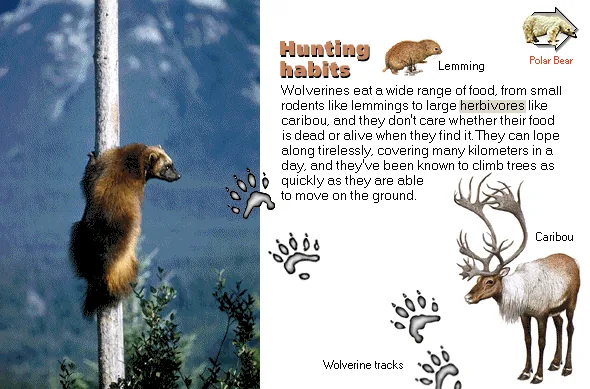
Wolverines eat a wide range of food, from small rodents like lemmings to large herbivores like caribou, and they don't care whether their food is dead or alive when they find it. They can lope along tirelessly, covering many kilometers in a day, and they've been known to climb trees as quickly as they are able to move on the ground.

LemmingLemming
Wolverine tracksWolverine tracks
CaribouCaribou
Feisty relatives

Feisty relatives

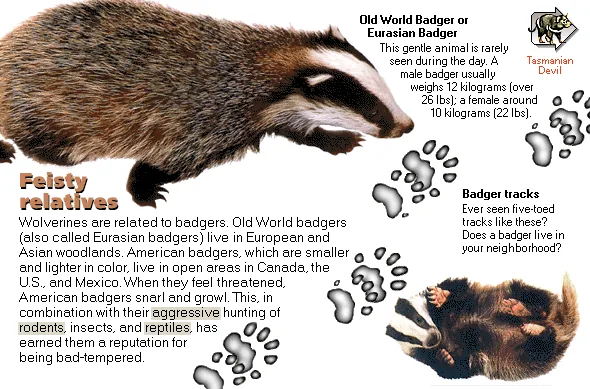
Wolverines are related to badgers. Old World badgers (also called Eurasian badgers) live in European and Asian woodlands. American badgers, which are smaller and lighter in color, live in open areas in Canada, the U.S., and Mexico. When they feel threatened, American badgers snarl and growl. This, in combination with their aggressive hunting of rodents, insects, and reptiles, has earned them a reputation for being bad-tempered.

Old World Badger or Eurasian BadgerThis gentle animal is rarely seen during the day. A male badger usually weighs 12 kilograms (over 26 lbs); a female around 10 kilograms (22 lbs).
Badger tracksEver seen five-toed tracks like these? Does a badger live in your neighborhood?
Carnivore competition

Carnivore competition

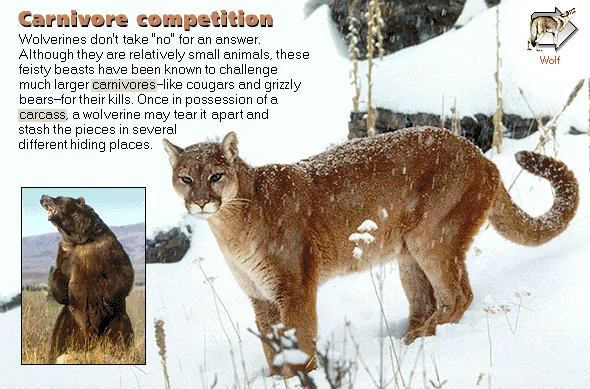
Wolverines don't take "no" for an answer. Although they are relatively small animals, these feisty beasts have been known to challenge much larger carnivores–like cougars and grizzly bears–for their kills. Once in possession of a carcass, a wolverine may tear it apart and stash the pieces in several different hiding places.

Strong for their size

Strong for their size

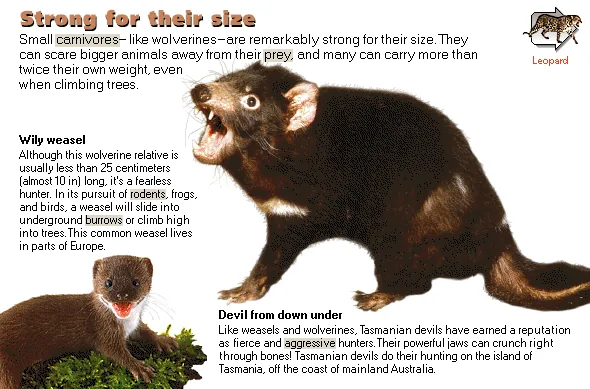
Small carnivores– like wolverines–are remarkably strong for their size. They can scare bigger animals away from their prey, and many can carry more than twice their own weight, even when climbing trees.

Wily weaselAlthough this wolverine relative is usually less than 25 centimeters (almost 10 in) long, it's a fearless hunter. In its pursuit of rodents, frogs, and birds, a weasel will slide into underground burrows or climb high into trees. This common weasel lives in parts of Europe.
Devil from down underLike weasels and wolverines, Tasmanian devils have earned a reputation as fierce and aggressive hunters. Their powerful jaws can crunch right through bones! Tasmanian devils do their hunting on the island of Tasmania, off the coast of mainland Australia.
Notorious namesakes

Notorious namesakes

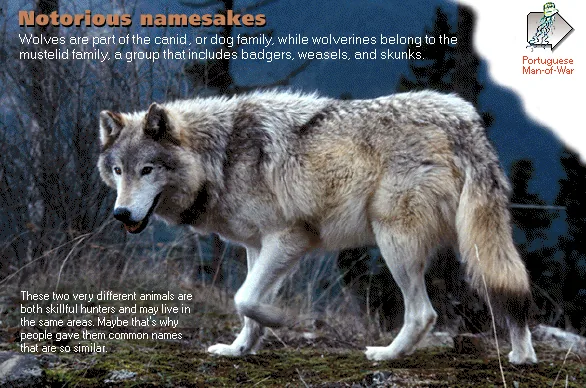
Wolves are part of the canid, or dog family, while wolverines belong to the mustelid family, a group that includes badgers, weasels, and skunks. These two very different animals are both skillful hunters and may live in the same areas. Maybe that's why people gave them common names that are so similar.

Watch

Petite but powerful — With its broad face and bone-crushing jaws, a wolverine looks more like a bear than like the weasels that are its true relatives. Wolverines are fierce hunters that control large territories. But these remarkable animals have themselves been hunted in many parts of the world. Their skins are valued by arctic peoples because ice crystals don't stick to the fur.

Source: Microsoft Dangerous Creatures (1994) CD-ROM. Text liberated from original screen art; images & clip restored from disc. Original media is Microsoft/supplier copyright — placeholder pending swap to open-licensed assets. Credits & Acknowledgements →