Dangerous Creatures
Passion-vine Caterpillar
Heliconius melpomene

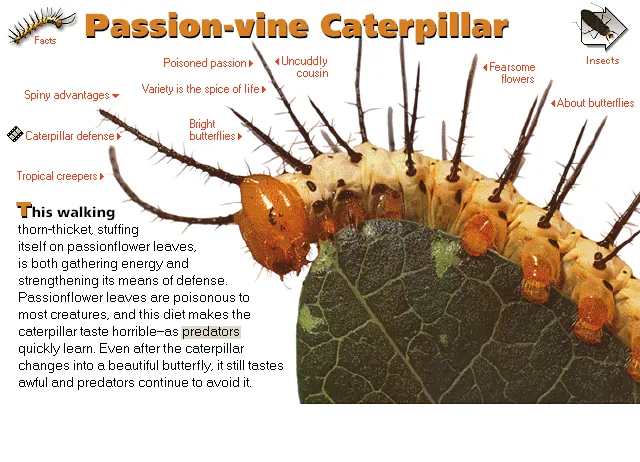
This spiky crawler munches poison leaves so it tastes terrible—a trick that keeps working even after it turns into a butterfly!

This walking thorn-thicket, stuffing itself on passionflower leaves, is both gathering energy and strengthening its means of defense. Passionflower leaves are poisonous to most creatures, and this diet makes the caterpillar taste horrible–as predators quickly learn. Even after the caterpillar changes into a beautiful butterfly, it still tastes awful and predators continue to avoid it.

Get closer

Poisoned passion

Poisoned passion

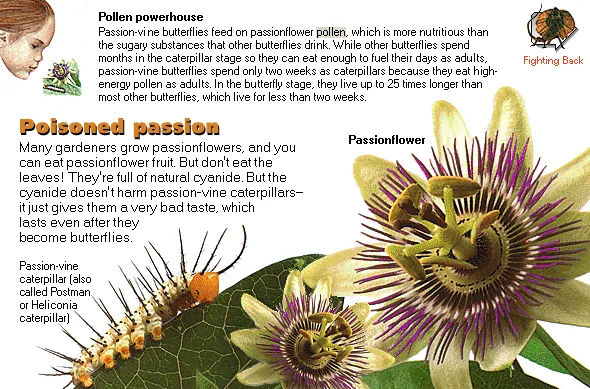
Many gardeners grow passionflowers, and you can eat passionflower fruit. But don't eat the leaves! They're full of natural cyanide. But the cyanide doesn't harm passion-vine caterpillars–it just gives them a very bad taste, which lasts even after they become butterflies.

Pollen powerhousePassion-vine butterflies feed on passionflower pollen, which is more nutritious than the sugary substances that other butterflies drink. While other butterflies spend months in the caterpillar stage so they can eat enough to fuel their days as adults, passion-vine butterflies spend only two weeks as caterpillars because they eat high-energy pollen as adults. In the butterfly stage, they live up to 25 times longer than most other butterflies, which live for less than two weeks.
PassionflowerPassionflower
Passion-vine caterpillar(also called Postman or Heliconia caterpillar)
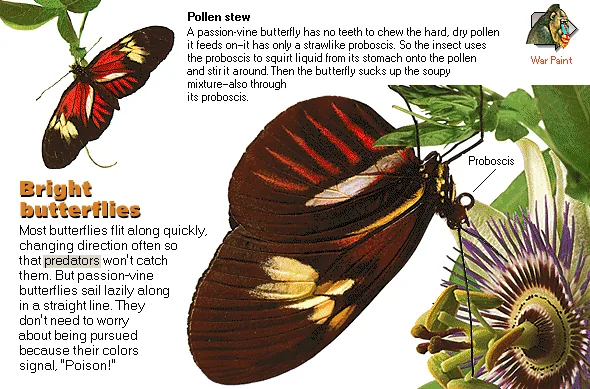
Bright butterflies

Bright butterflies

Most butterflies flit along quickly, changing direction often so that predators won't catch them. But passion-vine butterflies sail lazily along in a straight line. They don't need to worry about being pursued because their colors signal, "Poison!"

Pollen stewA passion-vine butterfly has no teeth to chew the hard, dry pollen it feeds on–it has only a strawlike proboscis. So the insect uses the proboscis to squirt liquid from its stomach onto the pollen and stir it around. Then the butterfly sucks up the soupy mixture–also through its proboscis.
ProboscisProboscis
Uncuddly cousin

Uncuddly cousin

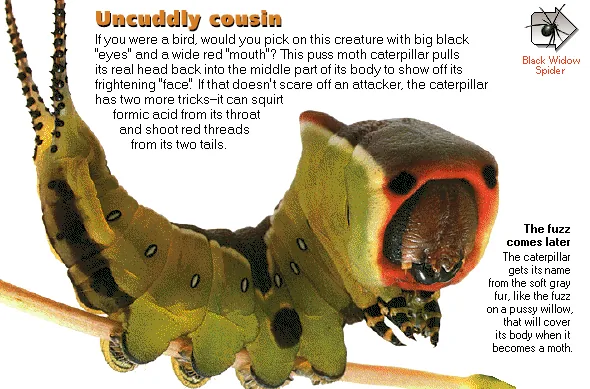
If you were a bird, would you pick on this creature with big black "eyes" and a wide red "mouth"? This puss moth caterpillar pulls its real head back into the middle part of its body to show off its frightening "face". If that doesn't scare off an attacker, the caterpillar has two more tricks–it can squirt formic acid from its throat and shoot red threads from its two tails.

The fuzz comes laterThe caterpillar gets its name from the soft gray fur, like the fuzz on a pussy willow, that will cover its body when it becomes a moth.
Tropical creepers

Tropical creepers

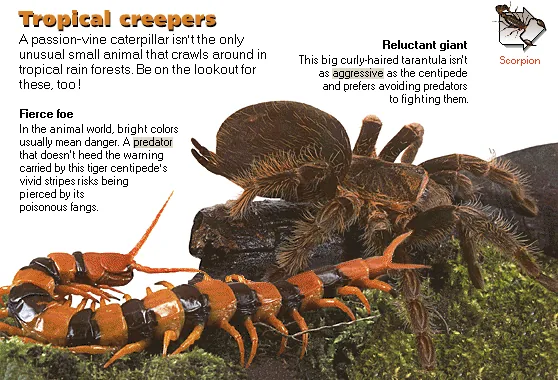
A passion-vine caterpillar isn't the only unusual small animal that crawls around in tropical rain forests. Be on the lookout for these, too!

Fierce foeIn the animal world, bright colors usually mean danger. A predator that doesn't heed the warning carried by this tiger centipede's vivid stripes risks being pierced by its poisonous fangs.
Reluctant giantThis big curly-haired tarantula isn't as aggressive as the centipede and prefers avoiding predators to fighting them.
Variety is the spice of life

Variety is the spice of life

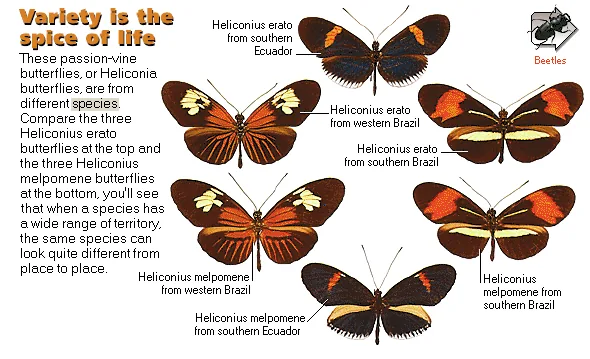
These passion-vine butterflies, or Heliconia butterflies, are from different species. Compare the three Heliconius erato butterflies at the top and the three Heliconius melpomene butterflies at the bottom, you'll see that when a species has a wide range of territory, the same species can look quite different from place to place.

Heliconius erato, southern EcuadorHeliconius erato from southern Ecuador
Heliconius erato, western BrazilHeliconius erato from western Brazil
Heliconius erato, southern BrazilHeliconius erato from southern Brazil
Heliconius melpomene, western BrazilHeliconius melpomene from western Brazil
Heliconius melpomene, southern EcuadorHeliconius melpomene from southern Ecuador
Heliconius melpomene, southern BrazilHeliconius melpomene from southern Brazil
About butterflies

About butterflies

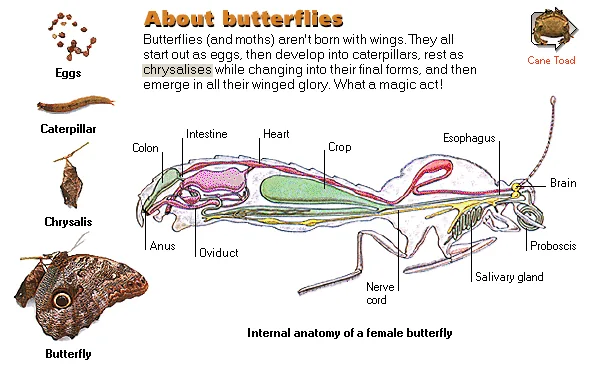
Butterflies (and moths) aren't born with wings. They all start out as eggs, then develop into caterpillars, rest as chrysalises while changing into their final forms, and then emerge in all their winged glory. What a magic act!

EggsEggs
CaterpillarCaterpillar
ChrysalisChrysalis
ButterflyButterfly
Internal anatomy of a female butterflyInternal anatomy of a female butterfly
Fearsome flowers

Fearsome flowers

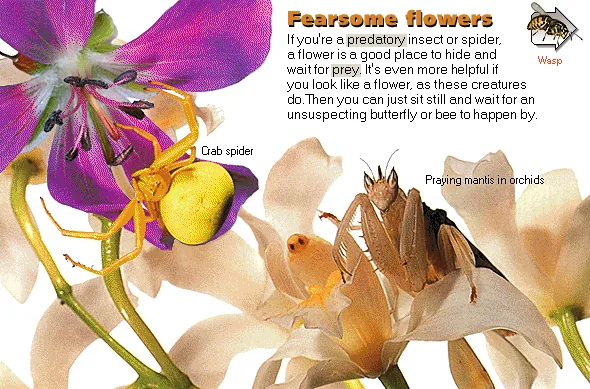
If you're a predatory insect or spider, a flower is a good place to hide and wait for prey. It's even more helpful if you look like a flower, as these creatures do. Then you can just sit still and wait for an unsuspecting butterfly or bee to happen by.

Crab spiderCrab spider
Praying mantis in orchidsPraying mantis in orchids
Spiny advantages

Spiny advantages

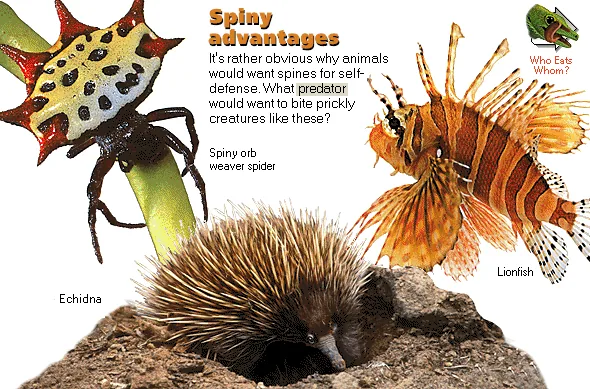
It's rather obvious why animals would want spines for self-defense. What predator would want to bite prickly creatures like these?

Spiny orb weaver spiderSpiny orb weaver spider
EchidnaEchidna
LionfishLionfish

Watch

Caterpillar defense — From bristling with sharp spines, to blending into their surroundings, to pretending to be something else, caterpillars use all kinds of tricks to keep from being eaten.

Source: Microsoft Dangerous Creatures (1994) CD-ROM. Text liberated from original screen art; images & clip restored from disc. Original media is Microsoft/supplier copyright — placeholder pending swap to open-licensed assets. Credits & Acknowledgements →